












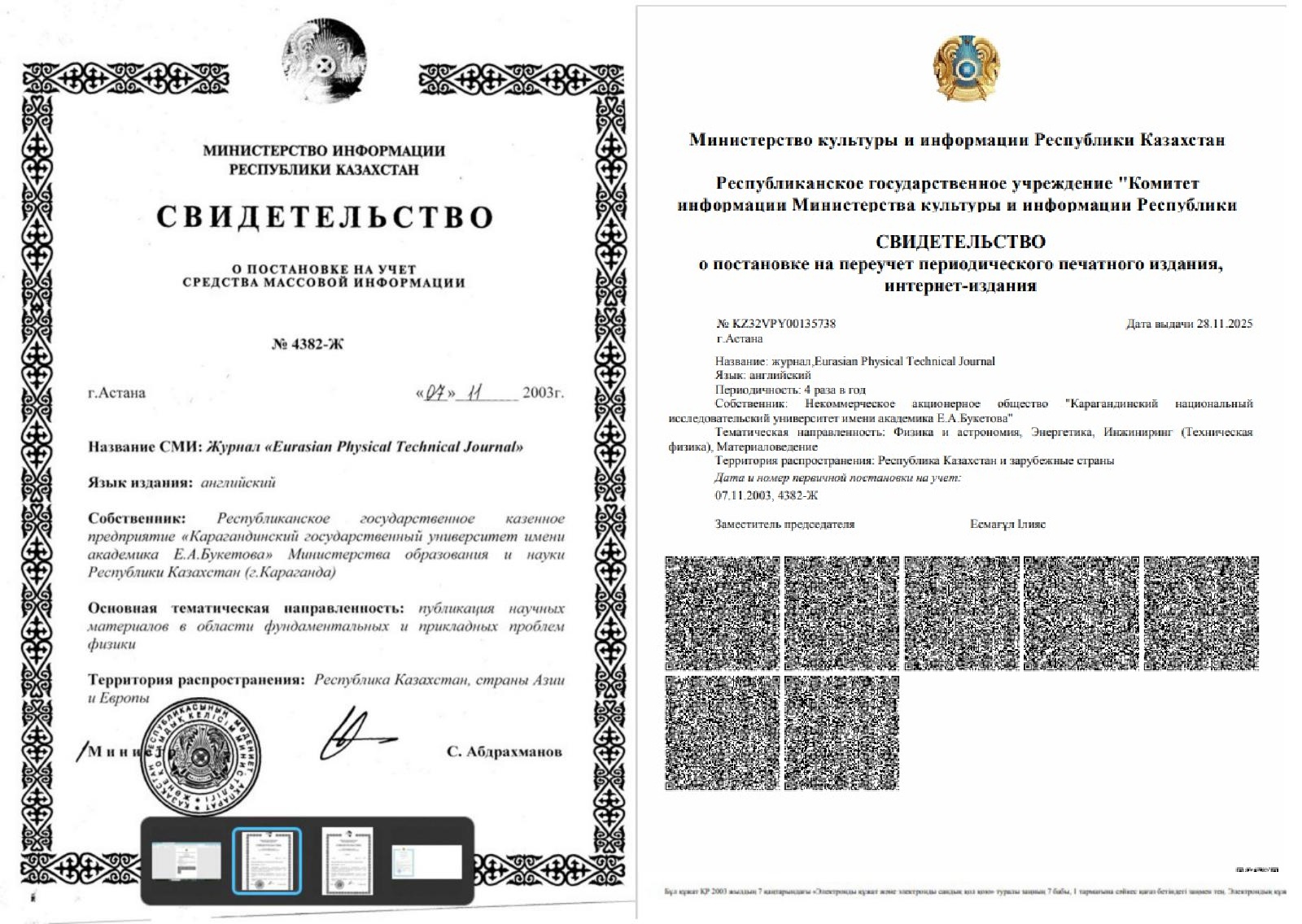
Certificates of registration and re-registration
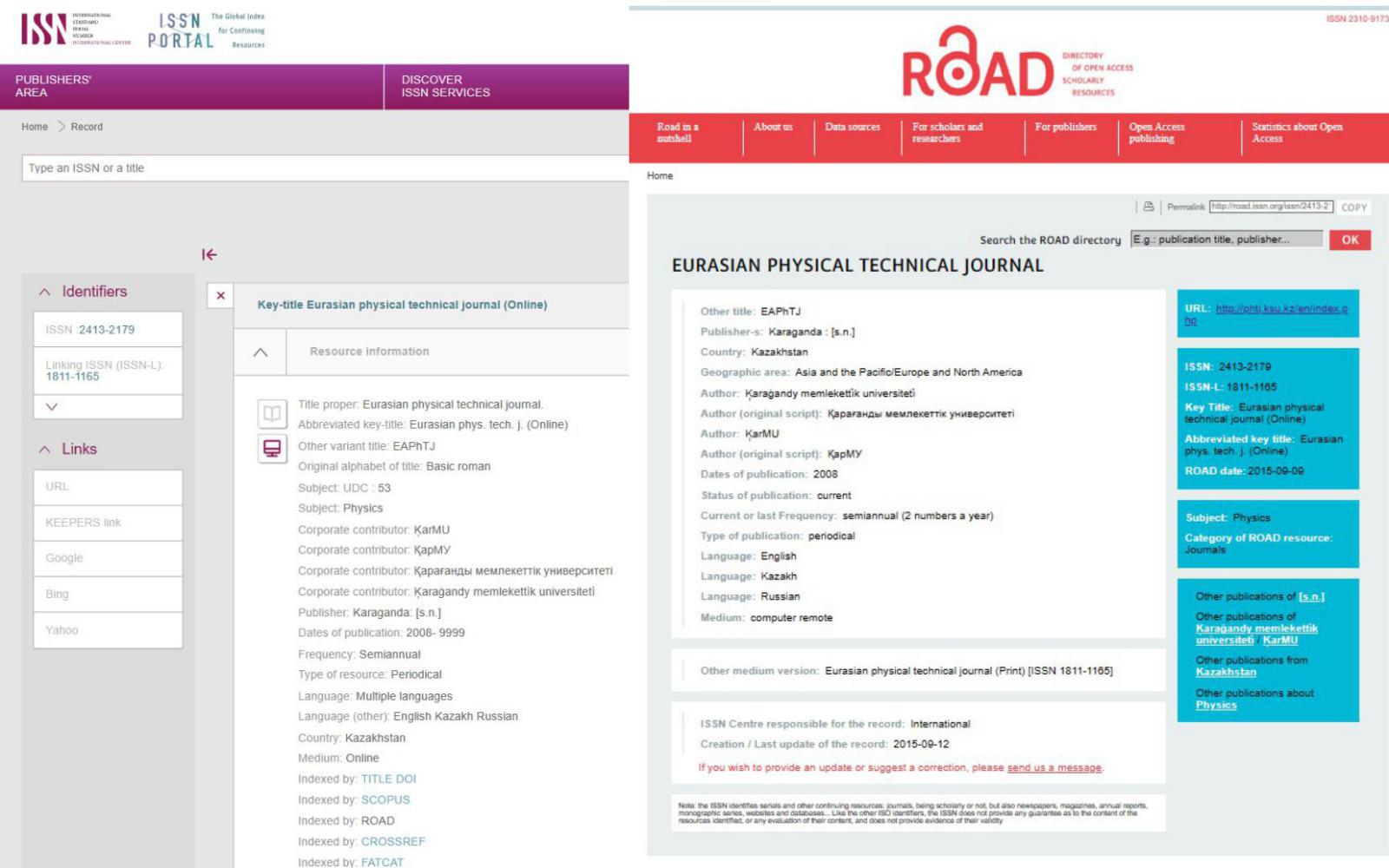
Confirmation of ISSN and Open Access status
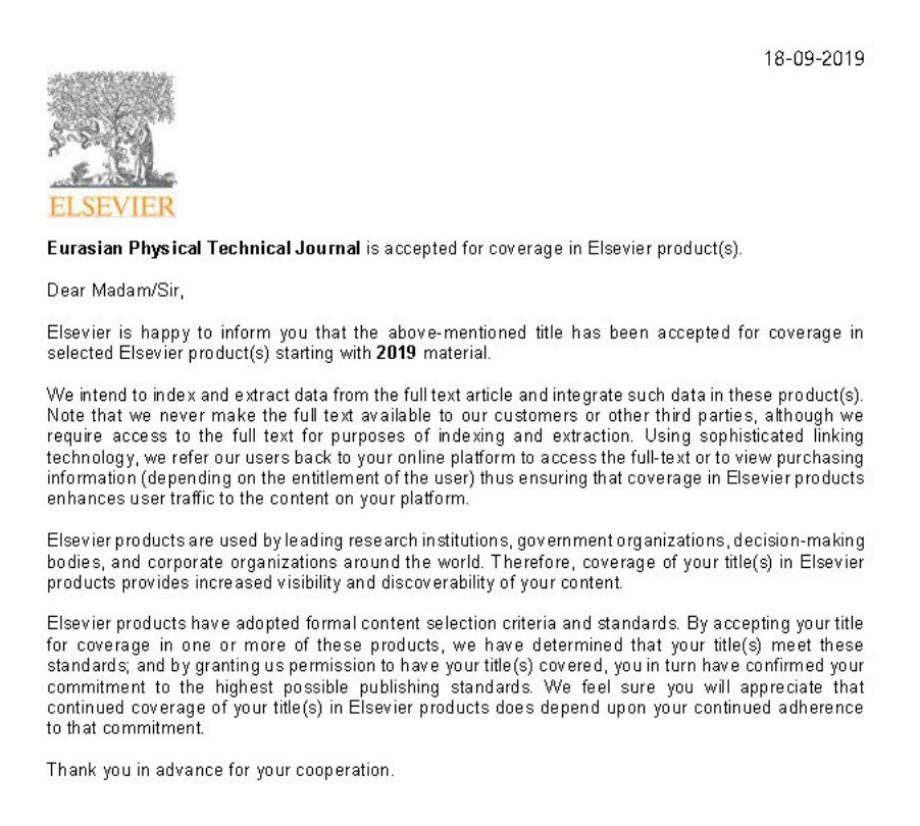
Confirmation of indexing in the SCOPUS database

WoS Certificate of RCSI Indexing
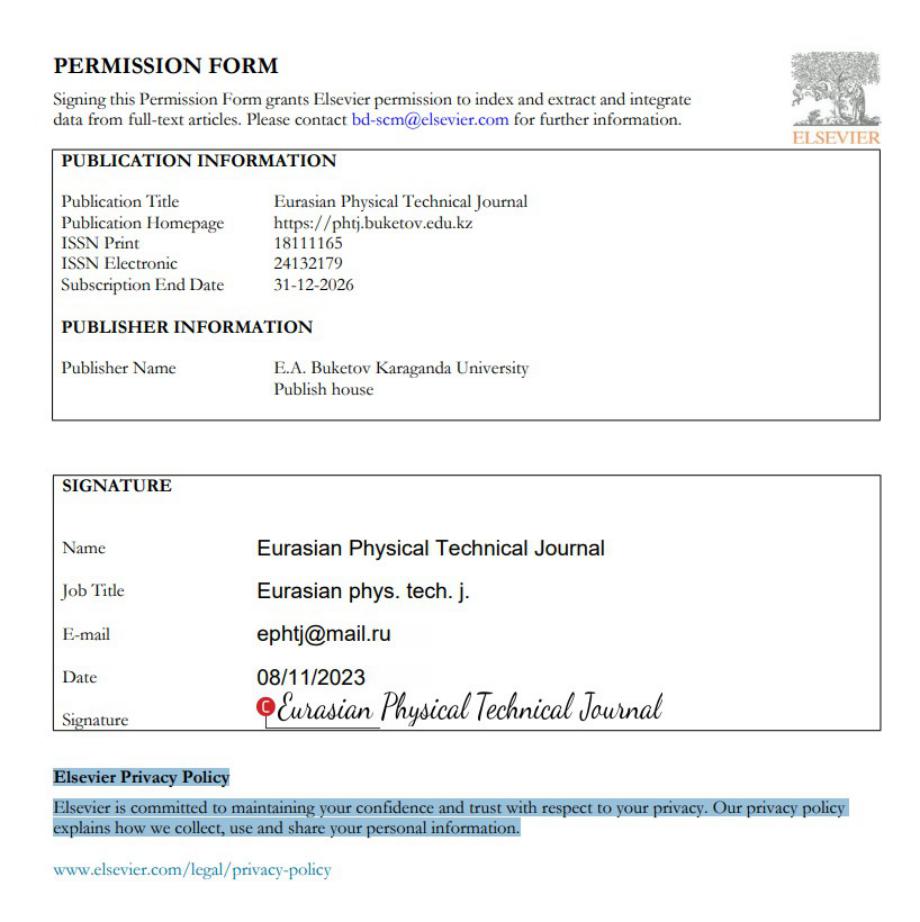
Elsevier permission
Generative AI tools and technologies are currently being used to generate various types of content, including text, images, audio, and synthetic data. Examples of such AI tools include ChatGPT, NovelAI, Jasper AI, Rytr AI, DALL-E, DeepSeek, Gemini, Canva, Copilot, and others.
The journal's policy is aimed to ensure transparency and disclosure of the role of AI, redefine authorship categories, and ensure oversight and verification for all participants in the journal's editorial process, including authors, reviewers, and editors. In this regard, the editorial board's position aligns with the position of the Committee on Publication Ethics (COPE).
A table outlining the main permitted and prohibited uses of AI tools is provided below. If authors are uncertain whether a particular method or result obtained with the assistance of AI tools complies with the journal’s policy, they are encouraged to contact the Editorial Board prior to submission. In such cases, authors will be asked to provide a detailed description of how AI tools were used.
| THE USE OF ARTIFICIAL INTELLIGENCE TOOLS | EXAMPLE OF THE USE OF AN AI TOOL | ALLOWED / NOT ALLOWED |
| MANUSCRIPT TEXT | ||
| Stylistic editing of the manuscript | Shortening sentences and adapting the manuscript text to a scientific style | NO |
| Grammar editing | Checking grammar, spelling, punctuation without changing the text | YES |
| Translation | Translating the manuscript text | YES |
| Presenting AI-generated content as original research data or results | Using AI tools to adapt AI-generated text to resemble human-written text | NO |
| STRUCTURED SECTIONS OF THE MANUSCRIPT | ||
| Writing an abstract | Using AI tools to write, expand, shorten, or otherwise generate all or part of the abstract | NO |
| Generating ideas | Using AI tools to create or write the hypothesis, aims, objectives, or research plan | NO |
| Creating an introduction | Creating or writing all or part of the Introduction section using AI tools | NO |
| Identifying sources for the literature review | Searching for sources based on author-defined keywords and criteria (e.g., open-access publications or sources from the past five years) | YES |
| Creating a bibliography | Although the use of AI tools to search for sources for the reference list is permitted, authors remain responsible for carefully checking the final reference list, as AI tools may produce results that appear authoritative but may be inaccurate, incomplete, or biased. | NO |
| Writing a literature review | Analyzing sources identified using AI tools or provided by the authors, including identifying research gaps and scientific novelty, and providing partial or complete descriptions of the sources | NO |
| Preliminary development of the methodology | Developing methodological approaches or identifying viable models for an initial research proposal to be further tested by the authors. | YES |
| Creating and describing the research methodology | Creation or writing of all or part of the Materials and Methods section using AI tools | NO |
| Ethical and social analysis | Creation of or monitoring compliance with ethical approvals and/or confidentiality requirements | NO |
| Data generation and management | Collection, validation, cleaning, curation, analysis, reproducibility checks, and organization of data | NO |
| Describing research results | Creation or writing of all or part of the Research Results section using AI tools | NO |
| Creating a discussion of the results | Identifying advantages and disadvantages, comparing results with those of other studies, and creating or writing the study’s limitations, practical significance, and prospects for future research | NO |
| Creating conclusions | Creating or writing all or part of the Conclusions section | NO |
| TECHNICAL AND VISUAL COMPONENTS OF THE MANUSCRIPT | ||
| Creating code | Generating code for the study | NO |
| Editing code | Improving author-written code using AI tools | YES |
| Data visualization | Visualizing the authors’ original data in the form of figures, graphs, diagrams, or tables | YES |
| Creating images | Creating images of actual experimental setups or samples, including microscope images and images of experimental results | NO |
| Editing images | Darkening, moving, removing or adding a certain feature to an image or figure | NO |
| Adjusting brightness, contrast, color balance, size of inscriptions | YES | |
This guideline is consistent with the Committee on Publication Ethics (COPE) position statement, which states that authors remain fully responsible for all manuscript content.
Certificates of registration and re-registration
Confirmation of ISSN and Open Access status
Confirmation of indexing in the SCOPUS database
WoS Certificate of RCSI Indexing
Elsevier permission