












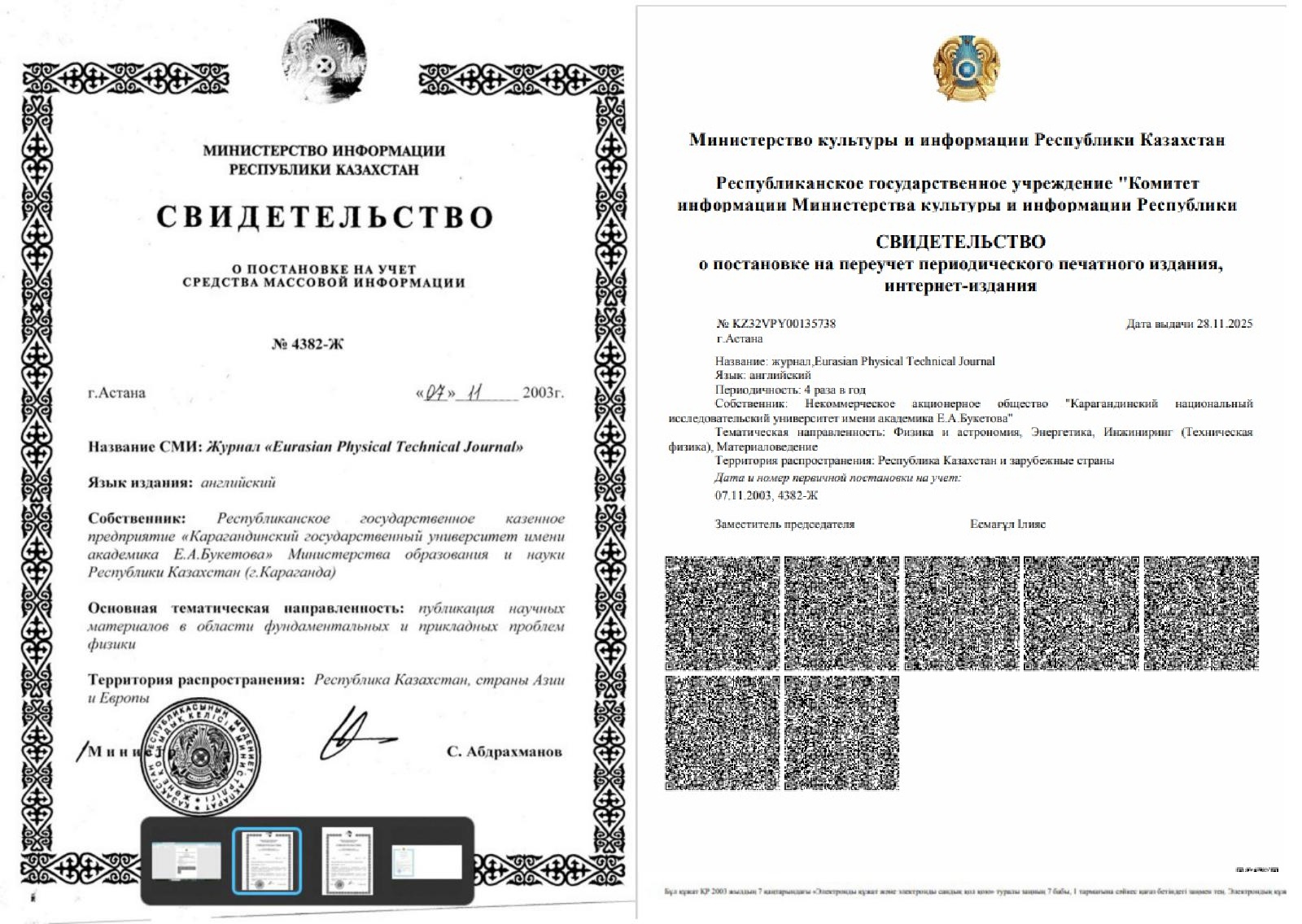
Certificates of registration and re-registration
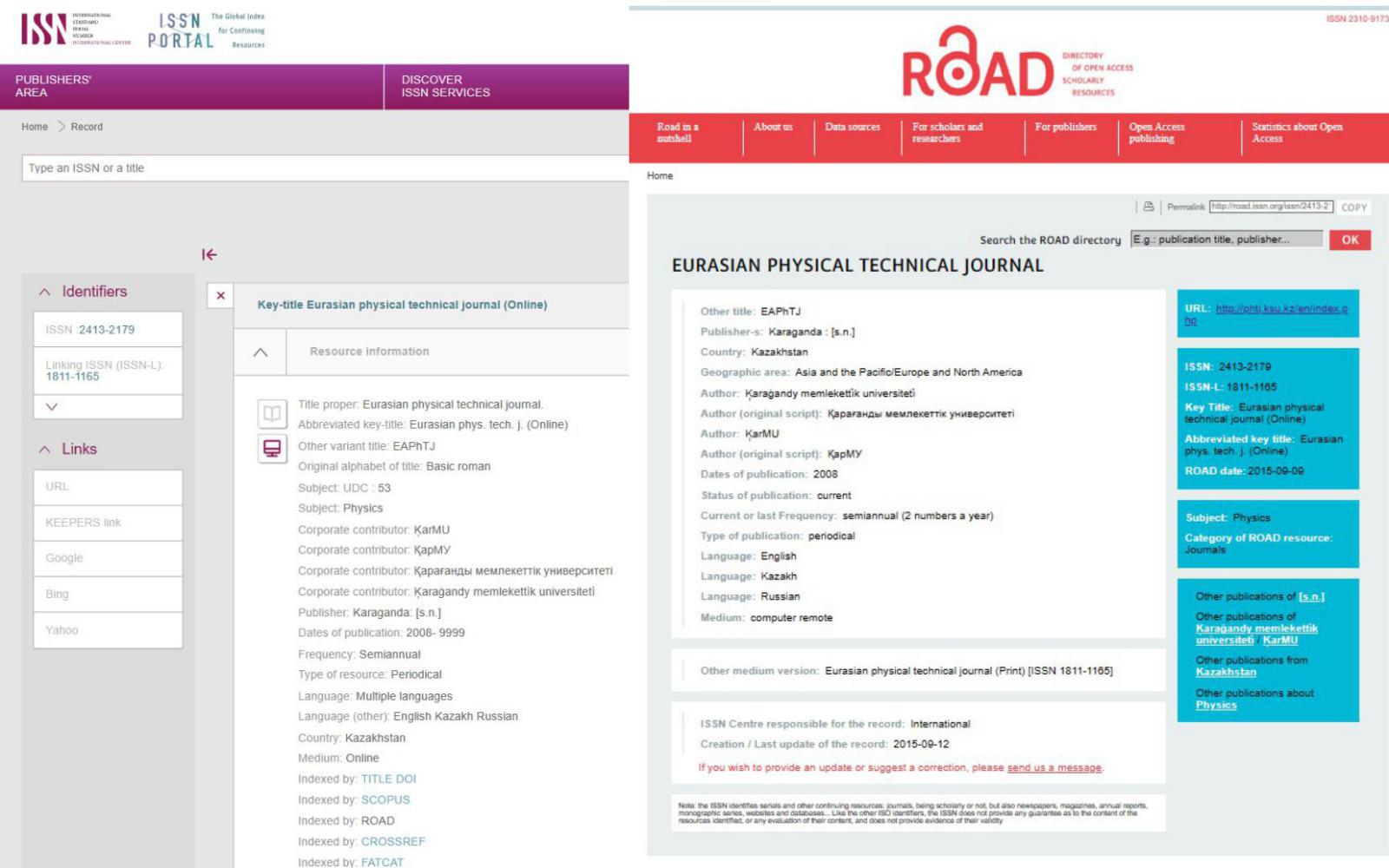
Confirmation of ISSN and Open Access status
Confirmation of indexing in the SCOPUS database
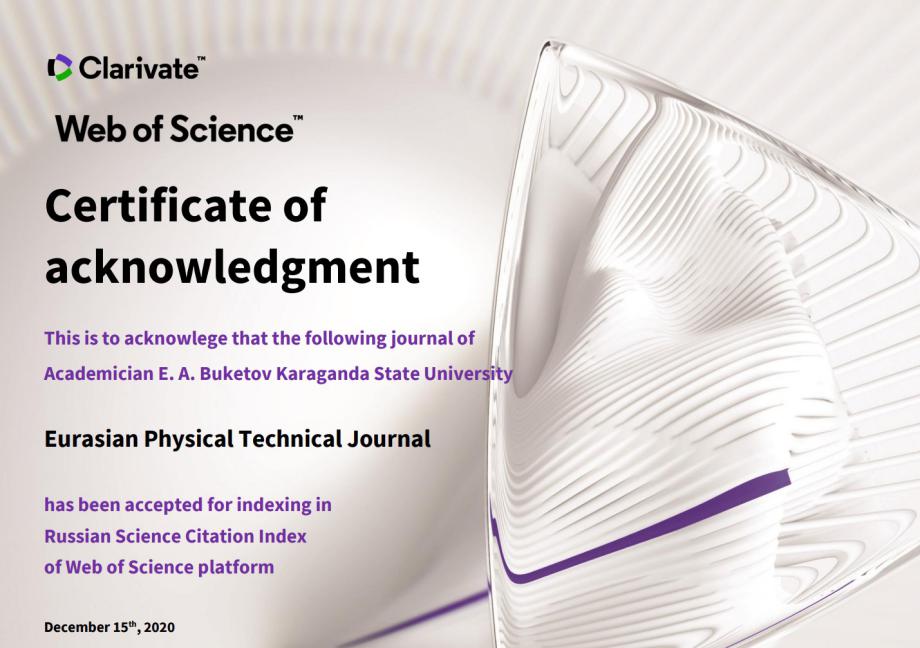
WoS Certificate of RCSI Indexing
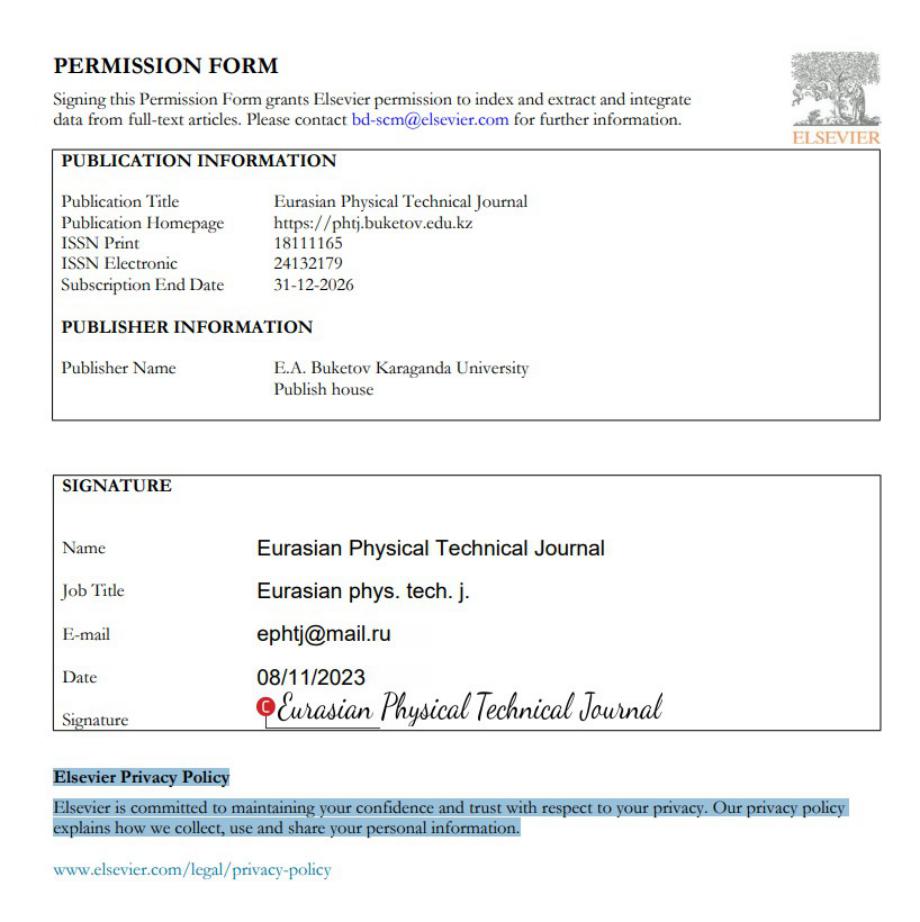
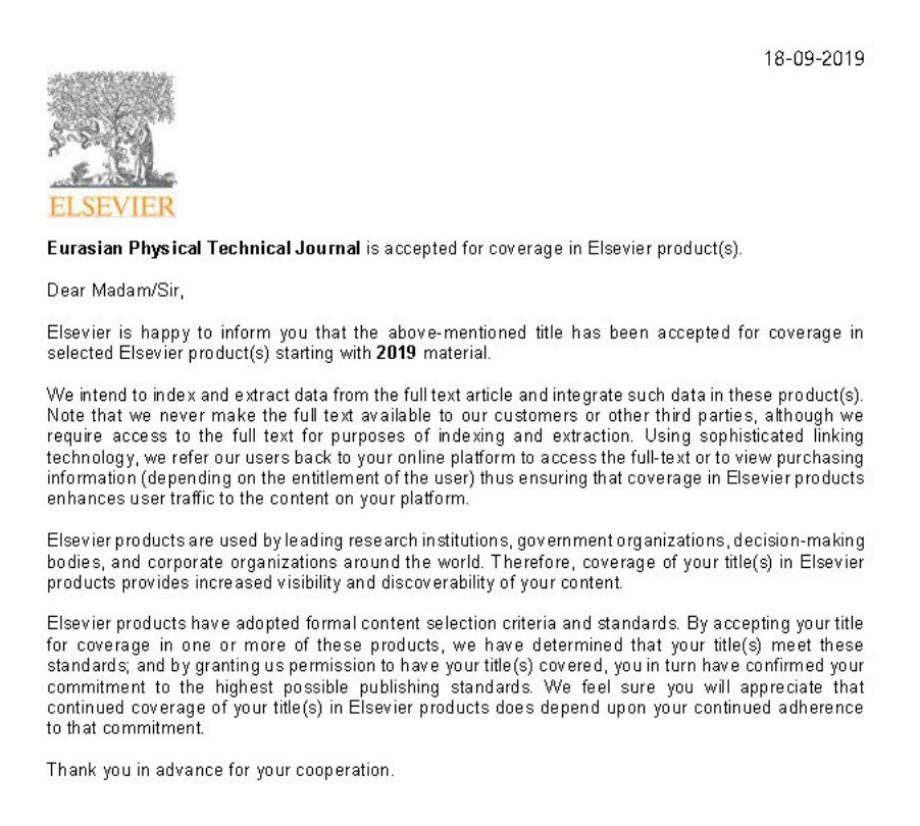
Elsevier permission
The publication in a peer reviewed learned journal, serves many purposes outside of simple communication. It is a building block in the development of a coherent and respected network of knowledge. For all these reasons and more it is important to lay down standards of expected ethical behavior by all parties involved in the act of publishing: the author, the journal editor, the peer reviewer, Publishing House and Scientific Society of the Buketov Karaganda National Research University that is sponsored the “Eurasian phys. tech. j.”.
Editorial Board and Scientific Society of the Buketov Karaganda National Research University have a supporting, investing and nurturing role in the scholarly communication process but is also ultimately responsible for ensuring that best practice is followed in its publications.
Publisher (University) takes its responsibilities as guardians of the scientific record extremely seriously. The service options and journal programs of the site record the "records of science", and we acknowledge our responsibility as guardians of these "records" in all our policies, not least in the ethical principles we have adopted here.
The journal's editorial policy for special issues is aimed at covering narrow, relevant topics in the technical physics field under the guidance of guest editors. This policy includes strict peer review, adherence to ethical standards, topical relevance, and high standards for the scientific quality of articles.
The purpose of special issues is to cover a specific topic and provide an in-depth study of current issues that may extend beyond the regular issues scope of the Eurasian Physical Technical Journal.
A special issue is a thematic issue or supplement to a periodical dedicated to a specific topic or dedicated to a significant date, a memorable event.
A special issue is used for in-depth analysis of specialized content in the field of technical physics, contributes to the journal's citation profile, and attracts a new audience of readers and authors.
Key elements of the special issue policy:
“Eurasian Physical Technical Journal” adheres to its own policy on the use of generative artificial intelligence (AI) in scientific publishing https://phtj.buketov.edu.kz/EPTJ/generative-ai, which adheres to the principles of COPE.
Certificates of registration and re-registration
Confirmation of ISSN and Open Access status
Confirmation of indexing in the SCOPUS database
WoS Certificate of RCSI Indexing
Elsevier permission